Africa is making its boldest collective demand in a century: the formal recognition of colonialism as an international crime, complete with calls for reparations, the return of stolen cultural artifacts, and accountability for genocide and resource plunder. As leaders convene in Algeria, a unified African bloc is challenging the global order that allowed slavery, land dispossession, and economic exploitation to enrich Western powers while destabilizing the Global South. This comprehensive analysis examines the legal, economic, and geopolitical implications of Africa’s historic move—why it matters now, what justice could look like, and how this shift may redefine international law and global power structures.
The Bible America Keeps Editing—and the Ancient Ethiopian Canon It Can’t Erase
The Catholic Church has edited Scripture for centuries. Now U.S. bishops plan another round of Bible changes for America. InnerKwest traces the pattern from Rome to Ethiopia—from colonial manipulation to Africa’s ancient canon—to ask a bold question: Who owns the meaning of the Bible, and why does it keep changing?
ECOWAS in the Crosshairs: EFFL’s Accusation of Western Puppetry Demands Scrutiny
As populist waves and Pan-African sentiments surge in West Africa, ECOWAS faces growing criticism over its alignment with foreign interests. Can the regional bloc reinvent itself before it loses all grassroots legitimacy?
The Cleansing of Memory: How Black Innovation Was Erased from the Skies and the Barrels
From Tennessee whiskey to Caribbean runways, Black excellence once thrived before history scrubbed it clean. The stories of master distiller Nearest Green and Black-owned airlines reveal a pattern of systemic erasure—and a rising movement to restore credit, capital, and cultural truth across generations.
Namibia’s Forgotten Wound: The First Genocide of the 20th Century
Between 1904 and 1908, German colonial forces in Namibia carried out the first genocide of the 20th century, killing tens of thousands of Herero and Nama. While Germany continues to pay reparations in Europe, its African victims remain uncompensated. The debt of this forgotten genocide is still unpaid.
Ethiopia: The First Christian Civilization and the Bible the West Tried to Edit
By Solomon Desta– InnerKwest Contributor | September 10, 2025 Ethiopia as a Different Kind of Light In the chronicles of world history, few nations stand as firmly outside the tide of conquest and manipulation as Ethiopia. Unlike most of Africa, Ethiopia resisted colonization and preserved its sovereignty in both political and spiritual terms. The Battle of Adwa in 1896 remains …
The Sahel’s Sovereignty Turn: Ibrahim Traoré, the AES, and Africa’s Battle for Its Own Voice
InnerKwest Ghana Bureau | Published August 24, 2025 From Ouagadougou to Niamey, the leaders of the Sahel Alliance are not asking Africa to adopt new enemies—only to claim its right to choose its own friends. As French media power deepens its hold on African broadcasting, Ibrahim Traoré, Mali, and Niger remind the continent that sovereignty is not a gift; it …
Haiti’s Stolen Centuries: From France’s 1825 “Ransom” to Vectus Global’s New Incursion
By InnerKwest – Haiti Historian – August 20, 2025 Two hundred years after France forced the world’s first Black republic to pay for its own freedom, Haiti faces a new bill—this time in the currency of sovereignty. In mid-August 2025, Blackwater founder Erik Prince said his new company, Vectus Global, has a 10-year deal with Haiti’s interim authorities: first to fight …
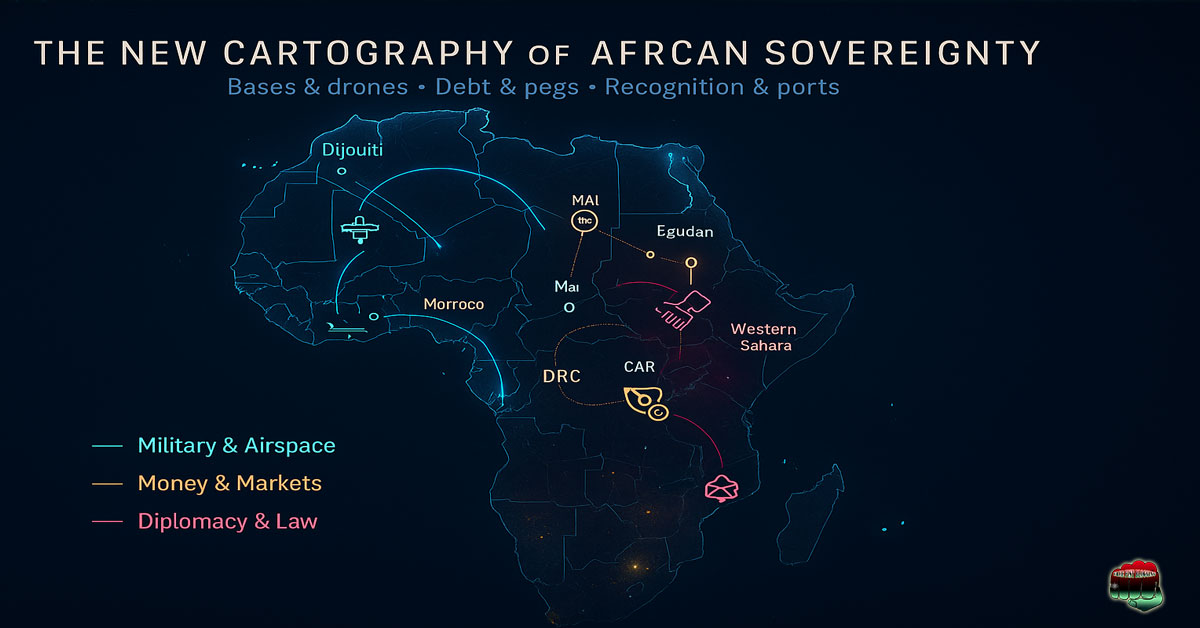
The New Cartography of African Sovereignty
By InnerKwest Editorial-Research Desk • August 16, 2025 Executive Summary Across Africa, sovereignty functions on a spectrum—pulled by foreign military footprints and air operations, hard-currency pegs and IMF programs, port leases and security pacts, and recognition politics. This report maps where external levers are strongest right now and explains how they translate into day-to-day constraints on government choices. Vectors of …
Orania’s Quiet Expansion: Can a Whites-Only Town Become South Africa’s Next Metropolis?
By Guest InnerKwest Contributor: Capetown, South Africa Introduction Orania, a privately owned Afrikaner enclave in South Africa’s Northern Cape province, remains one of the most provocative social experiments in post-apartheid Africa. Founded in 1991 with a mission to preserve Afrikaner culture and language, Orania is often viewed as a form of voluntary segregation. But as the town quietly expands economically …