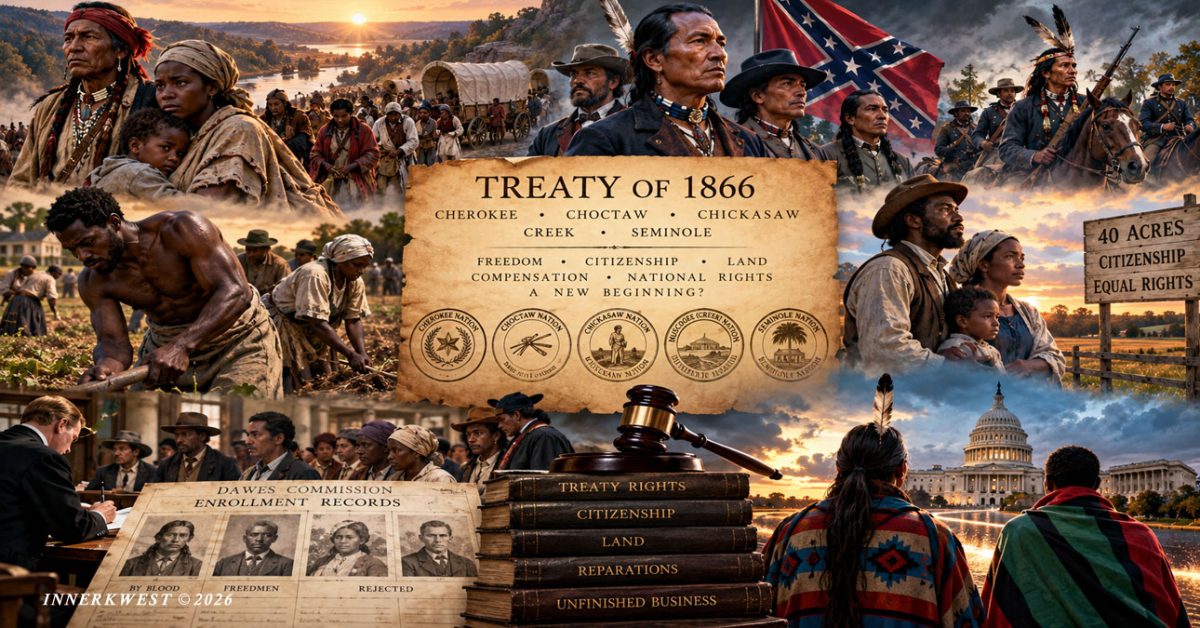
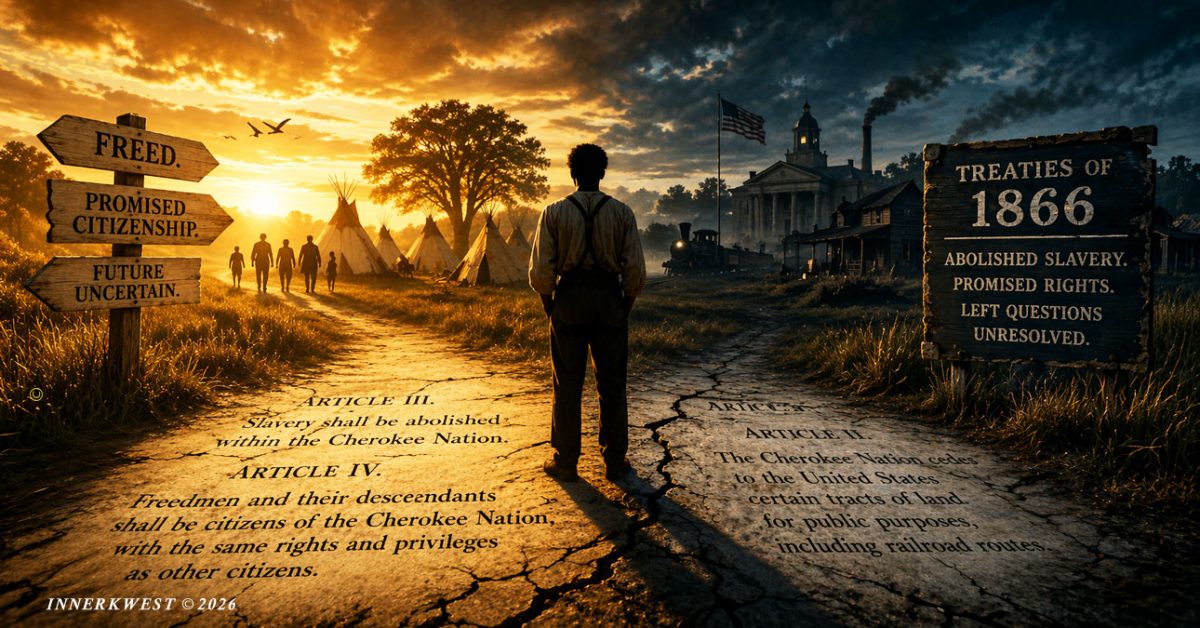
Historical cinematic illustration of Native American slaveholding, Confederate participation, African American Freedmen, the 1866 treaties, land rights, and Dawes Commission enrollment.

The Other Slaveholders: Native Nations, the Confederacy, and the Unfinished Promises of 1866

Five Native American nations entered treaties with the Confederacy during the Civil War, while some of their citizens held African Americans in slavery. The Reconstruction treaties of 1866 established freedom and varying citizenship, land, and financial protections for Freedmen. More than 160 years later, the consequences of those agreements continue to shape legal disputes and questions of historical accountability.
IK-APRIL-7

P.B.S. Pinchback: Power Granted, Power Denied, and the Architecture of Reconstruction

He rose to the highest office in a Southern state.And still, it was not enough to secure what was already his. By Intelligence Desk | April 7, 2026 Origin: Born Into a System That Had No Place for Him P. B. S. Pinchback was born in 1837—not enslaved, but not free in the full sense either. His mother had been …

IKOCT19

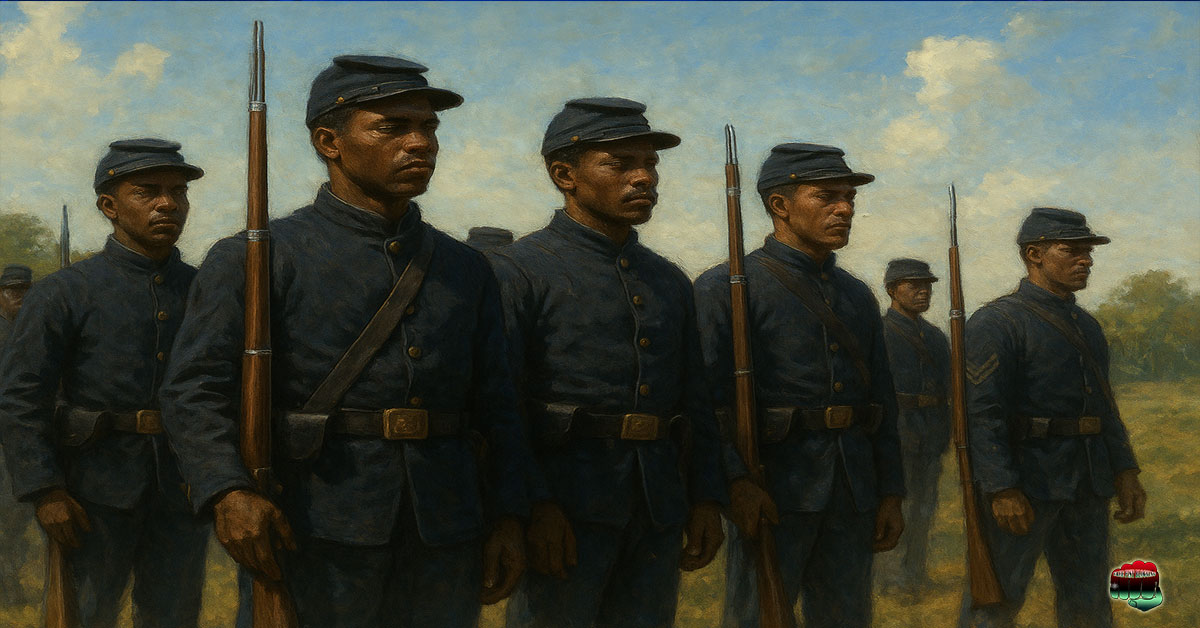
When the Freed Fought Back: The Black Militias Who Faced the Klan — and Won a Nation’s Respect

In 1871, under President Ulysses S. Grant, Black militias in South Carolina stood shoulder to shoulder with U.S. troops to dismantle Ku Klux Klan terror. Led by men like Prince Rivers, Robert Smalls, and Jim Williams, these disciplined defense units proved that when granted the means, freedmen could protect their communities — not through charity, but through courage and organization. Their stand remains one of America’s most overlooked triumphs of Reconstruction.