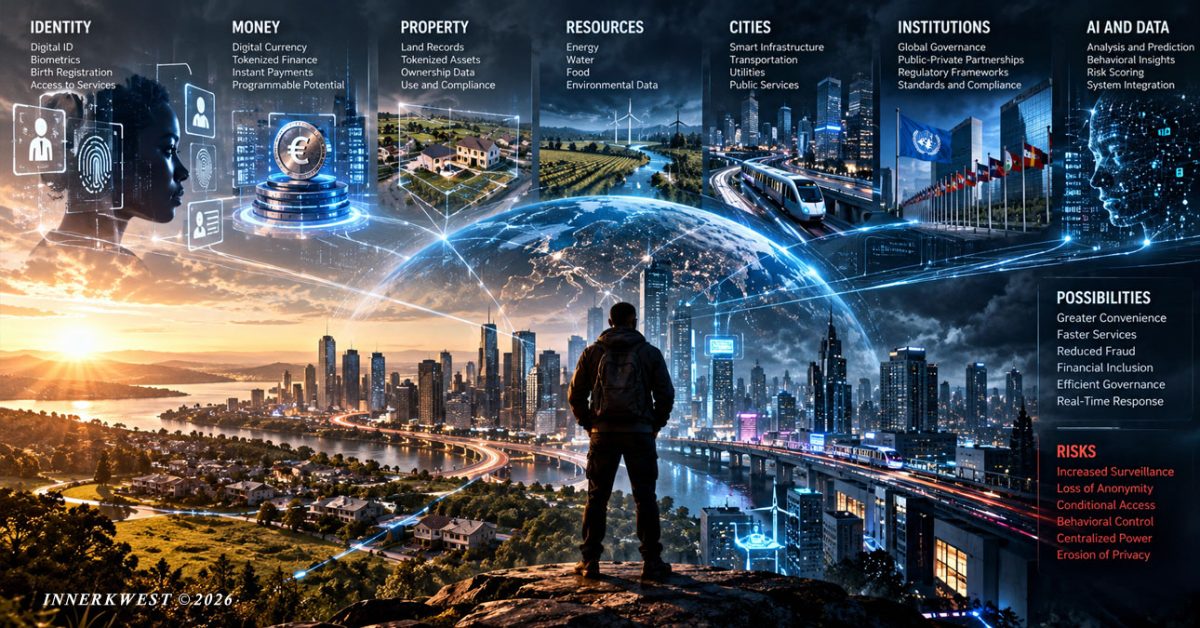
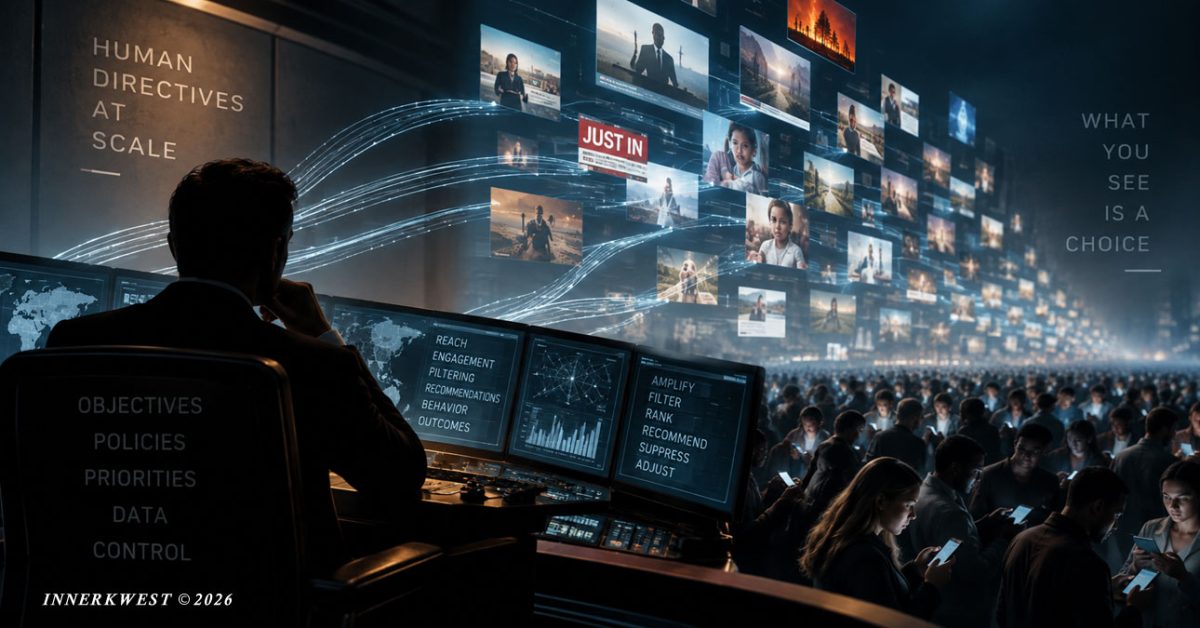
Editorial illustration examining Karen Attiah's Washington Post firing and reinstatement through questions of media power, workplace standards, race, gender and misogynoir.

Karen Attiah Got Her Job Back. The Harder Question Is Why She Lost It.

An arbitrator found that The Washington Post lacked sufficient cause to fire longtime opinion columnist Karen Attiah and ordered her reinstated with back pay. The decision settles an important labor question, but leaves another unresolved: whether race and gender influenced how Attiah’s words were interpreted and why termination became the chosen punishment. Examining that question introduces misogynoir—not as a predetermined verdict, but as a hypothesis that should be tested against evidence.

A cinematic illustration of financial risk flowing through interconnected AI data centers, private credit markets, securitization structures, institutional investors, and offshore reinsurance networks, symbolizing the hidden transfer of financial exposure within the artificial intelligence economy.

The Hidden Balance Sheet of Artificial Intelligence

Artificial intelligence is transforming technology, but modern finance is transforming something equally important: the ownership of risk. This second installment of the InnerKwest Special Investigation examines securitization, originate-to-distribute finance, Regulation AB, Regulation RR, and offshore reinsurance to understand how financial exposure migrates through the AI economy.

Ancient Persian ruins face a towering U.S. dollar monument and modern financial institutions as glowing global transaction networks encounter barriers, symbolizing the reach of American financial power and sanctions.

Voodoo Economics: America, Persia and the Weaponization of Financial Will

As Washington threatens countries doing business with Iran with exclusion from the dollar-based financial system, an uncomfortable question emerges: when does economic statecraft become the imposition of national will? From America’s Christian symbolism and the biblical legacy of Persia to secondary sanctions, dollar dominance and the growing incentive for financial alternatives, InnerKwest examines the moral, economic and geopolitical consequences of turning the world’s dominant currency into an instrument of coercion.

AI is transforming music, film, employment and creative production. Yet Black writers are facing extraordinary consequences over suspected AI use while other authors openly acknowledge using the technology. The Jerry Falade controversy raises a larger question about race, permission and modern literary gatekeeping.

Who Gets to Use AI? The New Gatekeepers of Human Creativity

AI is transforming music, film, employment and creative production. Yet Black writers are facing extraordinary consequences over suspected AI use while other authors openly acknowledge using the technology. The Jerry Falade controversy raises a larger question about race, permission and modern literary gatekeeping.

A cinematic illustration of massive AI data centers connected through glowing financial networks representing private credit, insurance capital, securitization, and institutional investment powering the artificial intelligence economy.

The Hidden Balance Sheet of Artificial Intelligence

Artificial intelligence is often presented as a technology story. In reality, it is also one of the largest financing stories in modern history. This InnerKwest Special Investigation explores how private credit, insurance capital, securitization, and offshore reinsurance have become central to funding the global AI infrastructure race—and why understanding that financial architecture matters.

Cinematic illustration symbolizing the inheritance of opportunity through education, institutional access, wealth, and artificial intelligence, contrasted with unequal pathways to success.

The Inheritance of Opportunity: America’s Consistent Merit Divide

For generations, Americans have believed that hard work and determination define success. But as wealth, institutional access, and artificial intelligence increasingly shape who gets the opportunity to develop their talents, the nation may be confronting a deeper question: Are we still measuring merit—or simply rewarding inherited opportunity?

Symbolic illustration representing constitutional rights, firearm regulation, and the debate over whether equal laws create unequal burdens for Black firearm ownership in America.

The Second Amendment’s Unequal Burden: When Equal Laws Produce Unequal Access

A Missouri lawsuit challenging the National Firearms Act has reignited a broader constitutional question: Can regulations that appear equal on paper produce unequal burdens in practice? As a Black-owned firearms retailer moves to the center of the debate, InnerKwest examines history, regulatory access, and whether public trust is earned through evidence rather than assumption.

Narrative Capital illustration showing a group of financial and technology professionals overlooking a futuristic AI-powered skyline connected to the New York Stock Exchange, symbolizing how belief, capital, compute, data, energy, and talent converge to shape the next era of institutional investing

Narrative Capital: Is AI Creating an Entirely New Asset Class?

Artificial intelligence is changing more than technology—it may be transforming the very way capital is allocated. As investors increasingly fund compelling visions of the future rather than decades of proven performance, a new economic force is emerging: narrative capital.

Cinematic illustration of a solitary figure facing two futures: a technologically advanced city powered by artificial intelligence, data centers, and energy infrastructure on one side, and a quiet community with empty public spaces on the other, representing the societal questions surrounding AI, human participation, and the future of work.

The AI Paradox: Engineering Prosperity While Redefining Human Purpose

The race to dominate artificial intelligence has become one of the defining geopolitical competitions of our time. Nations are investing in infrastructure, energy, and computing power at a historic pace, convinced that technological leadership will shape the future global order. Yet amid this pursuit of progress, a fundamental question remains largely unanswered: Can a society become more productive while gradually reducing the role people play within it? The answer may determine whether the AI era is remembered as humanity’s greatest achievement—or its greatest test.