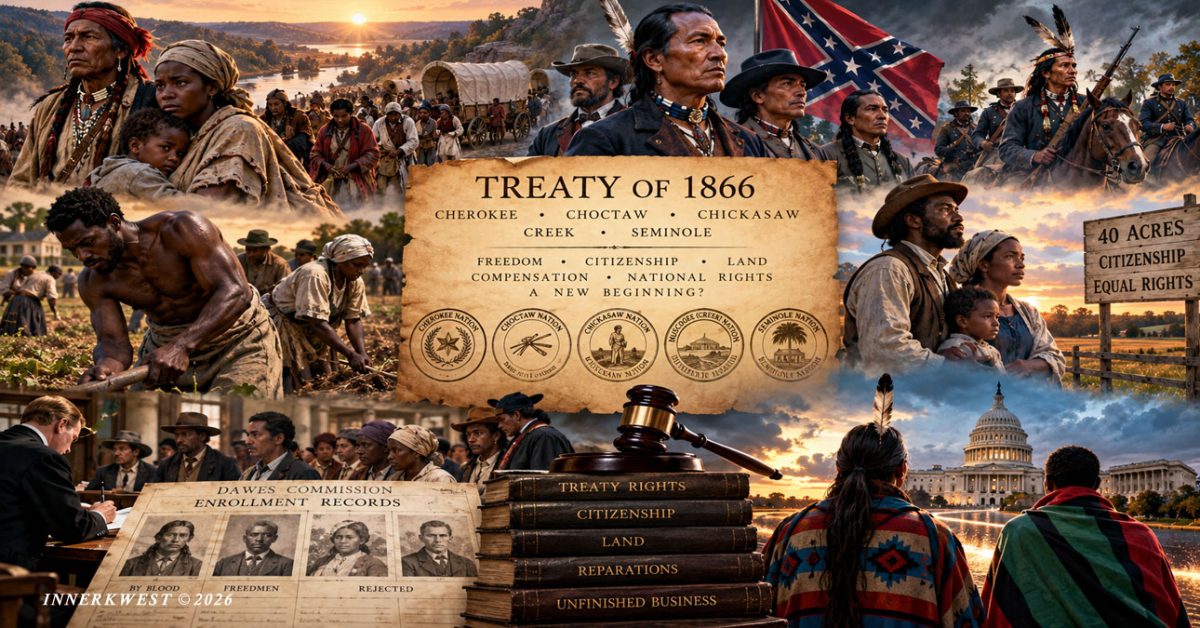
Historical cinematic illustration of Native American slaveholding, Confederate participation, African American Freedmen, the 1866 treaties, land rights, and Dawes Commission enrollment.

The Other Slaveholders: Native Nations, the Confederacy, and the Unfinished Promises of 1866

Five Native American nations entered treaties with the Confederacy during the Civil War, while some of their citizens held African Americans in slavery. The Reconstruction treaties of 1866 established freedom and varying citizenship, land, and financial protections for Freedmen. More than 160 years later, the consequences of those agreements continue to shape legal disputes and questions of historical accountability.
IKDEC

Colonialism on Trial: Africa’s Boldest Move in a Century — The Push to Declare Colonialism an International Crime and Rewrite Global Power

Africa is making its boldest collective demand in a century: the formal recognition of colonialism as an international crime, complete with calls for reparations, the return of stolen cultural artifacts, and accountability for genocide and resource plunder. As leaders convene in Algeria, a unified African bloc is challenging the global order that allowed slavery, land dispossession, and economic exploitation to enrich Western powers while destabilizing the Global South. This comprehensive analysis examines the legal, economic, and geopolitical implications of Africa’s historic move—why it matters now, what justice could look like, and how this shift may redefine international law and global power structures.

HAITI-AUGUST20

Haiti’s Stolen Centuries: From France’s 1825 “Ransom” to Vectus Global’s New Incursion

By InnerKwest – Haiti Historian – August 20, 2025 Two hundred years after France forced the world’s first Black republic to pay for its own freedom, Haiti faces a new bill—this time in the currency of sovereignty. In mid-August 2025, Blackwater founder Erik Prince said his new company, Vectus Global, has a 10-year deal with Haiti’s interim authorities: first to fight …