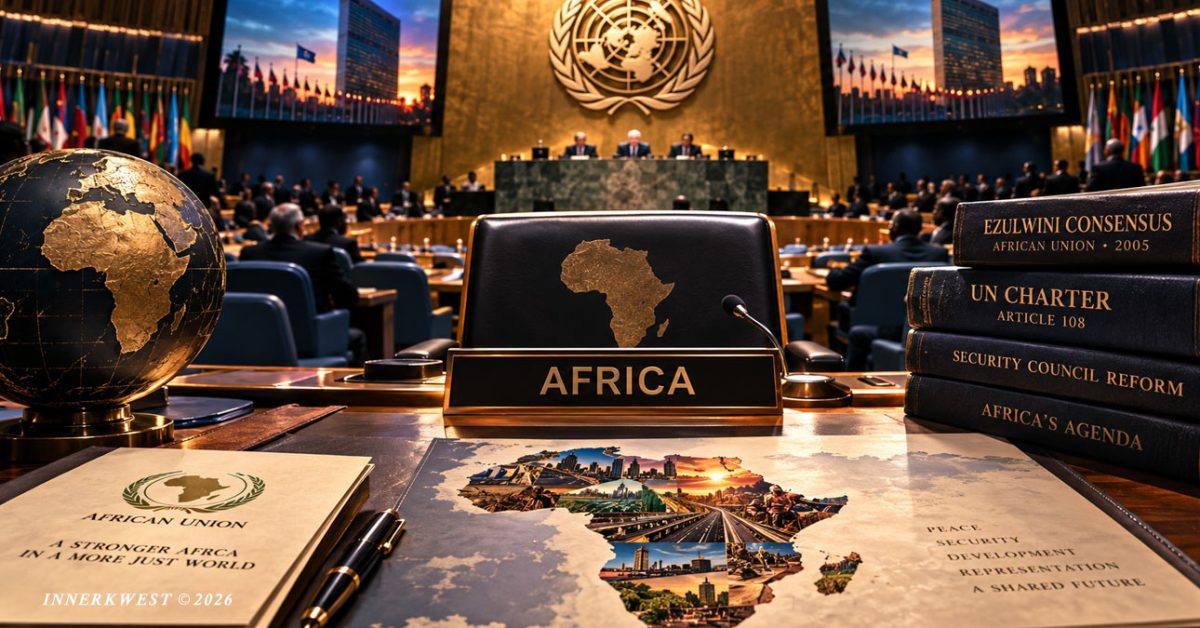
The recognition of slavery as a crime against humanity establishes a global record—but it does not guarantee structural change. This InnerKwest analysis examines how accountability systems absorb acknowledgment without necessarily producing outcomes.
On Record: When History Is Acknowledged—but Not Accepted (Part 2)
The U.N. resolution recognizing slavery as the gravest crime against humanity passed with broad support—but key nations resisted its implications. This InnerKwest analysis examines how legal arguments, abstentions, and opposition reveal the limits of acknowledgment within existing global systems.
On Record: When History Is Acknowledged—but Not Accepted (Part 1)
The United Nations has recognized slavery as the gravest crime against humanity, following a resolution led by Ghana. This InnerKwest analysis examines what that recognition establishes—and the deeper questions it leaves unresolved.
UN Moves to Nairobi: Token Gesture or Tectonic Shift?
📰 INNERKWEST FEATUREIntelligence Desk | InnerKwest.com A UN Move to Africa — But Who Still Holds the Power? The United Nations Population Fund (UNFPA) is relocating a quarter of its New York-based staff to Nairobi, Kenya—a move quietly unfolding with far-reaching implications. While the stated goal is decentralization and cost savings, African observers, sovereignty advocates, and geopolitical analysts are asking …