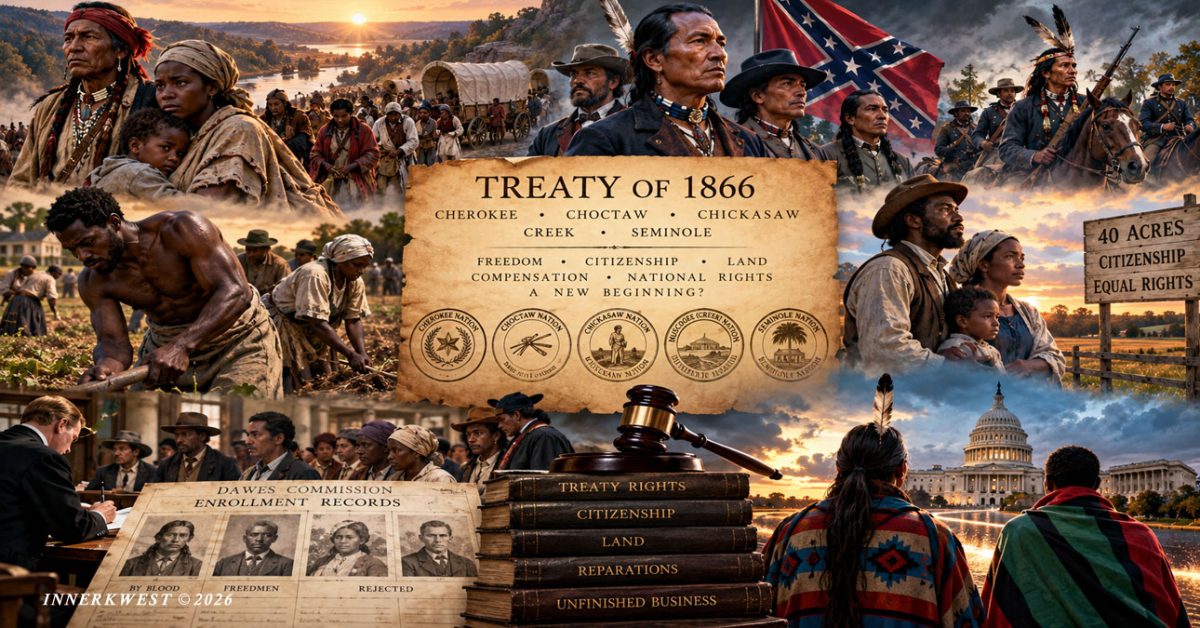
Five Native American nations entered treaties with the Confederacy during the Civil War, while some of their citizens held African Americans in slavery. The Reconstruction treaties of 1866 established freedom and varying citizenship, land, and financial protections for Freedmen. More than 160 years later, the consequences of those agreements continue to shape legal disputes and questions of historical accountability.
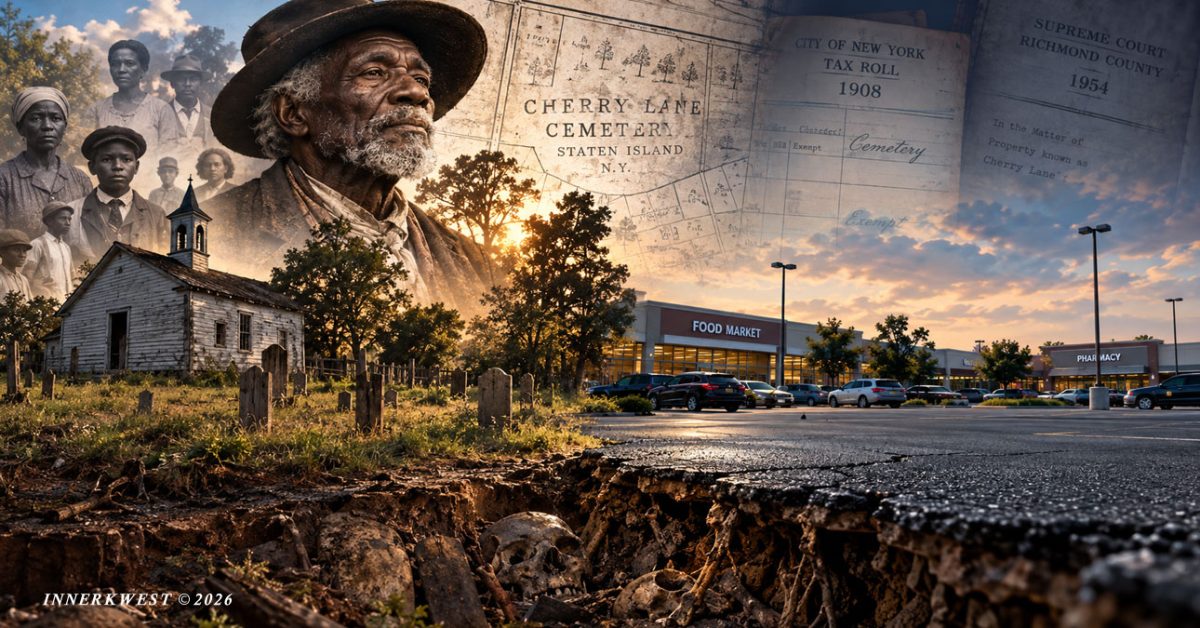
Beneath the Asphalt: How a Black Cemetery Disappeared From Staten Island Without the Dead Disappearing
Once a burial ground for Staten Island’s Black community, Cherry Lane Cemetery eventually disappeared beneath commercial development. InnerKwest follows the surviving records, unresolved legal history and people working to recover what the landscape nearly erased.
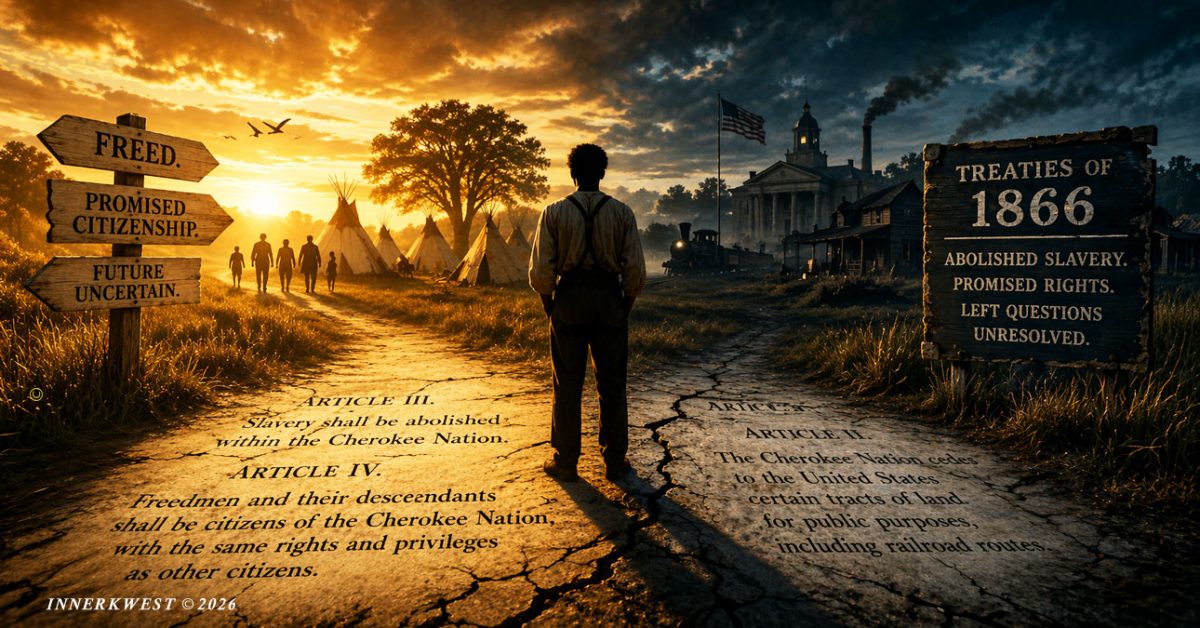
Freed, But Not Fully Included: The 1866 Treaties and the Structure of Recognition Without Stability
The 1866 treaties freed enslaved people in Native nations but did not secure full inclusion. This piece examines Freedmen citizenship, land, and ongoing legal battles.
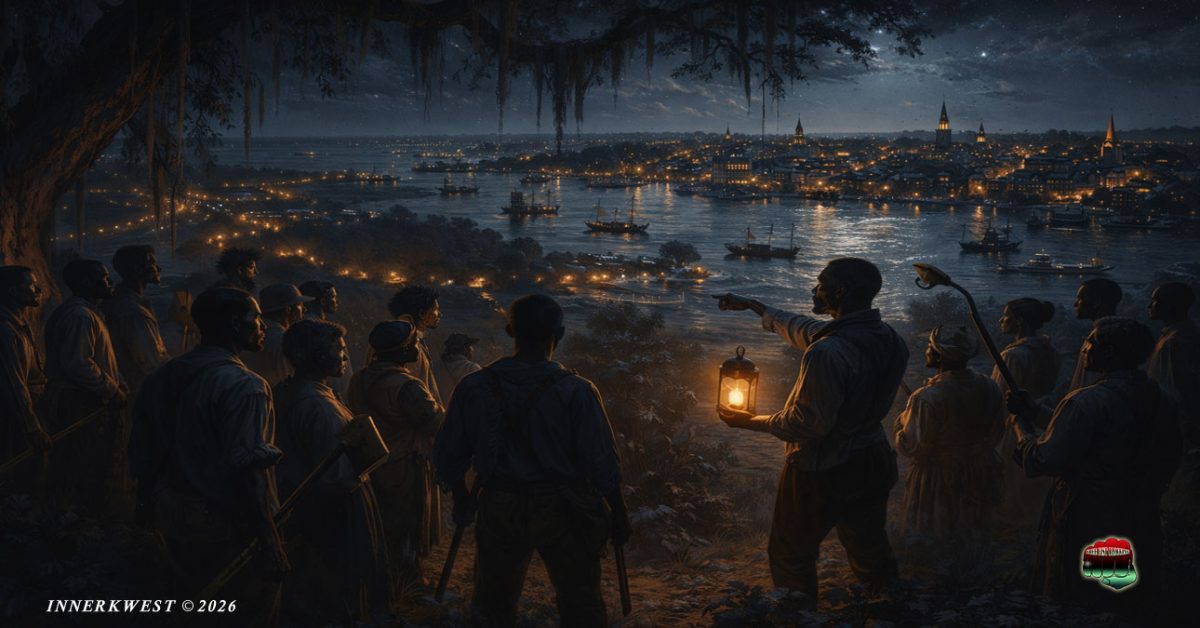
Denmark Vesey’s Army: The Revolt That Could Have Changed American History
Decades before the Civil War, Charleston authorities uncovered a planned slave uprising led by Denmark Vesey that they believed could mobilize tens of thousands.