
By InnerKwest | Intelligence Desk | December 3, 2025
A Century in the Making: Africa Steps into Historical Alignment
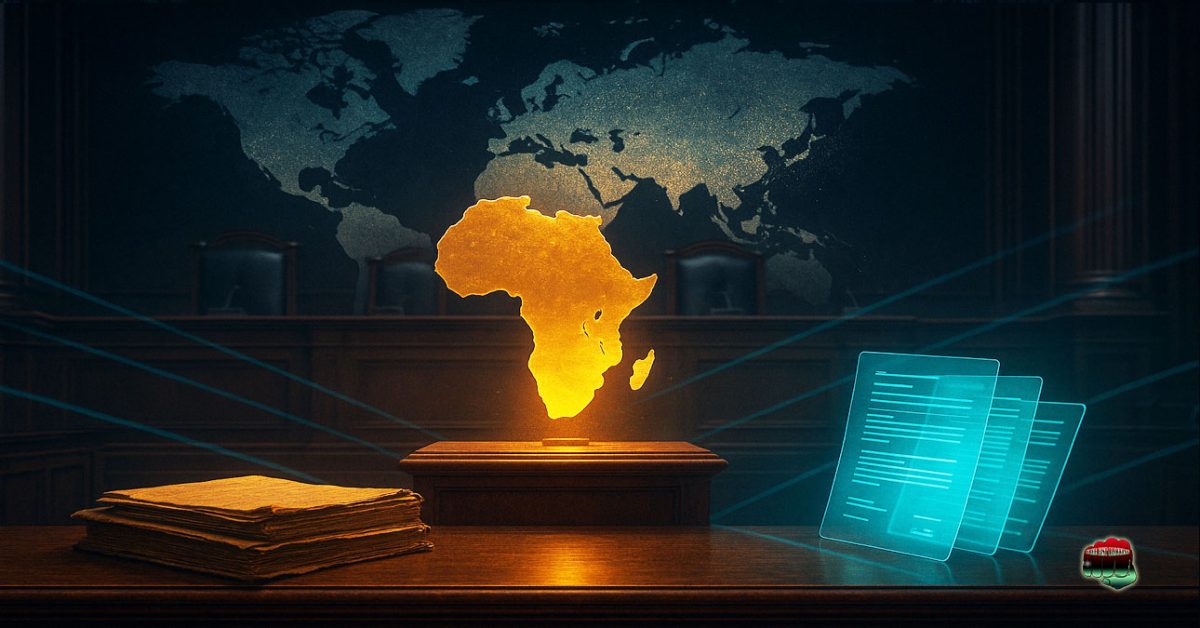
For decades, African states have demanded justice for the legacies of colonialism — land dispossession, extractive theft, artificial borders, racial hierarchies, cultural erasure, and state-sponsored terror. But the recent Algeria gathering marks the first time African nations have moved in unified formation to categorize colonialism itself as an international crime, with implications that stretch from reparations to global resource sovereignty.
This is not merely a political statement — it is an opening salvo in a long-overdue legal and diplomatic realignment.
It signals that African nations are prepared to articulate a shared future beyond Western custodianship, beyond imposed narratives, and beyond the selective amnesia of international law.
Why Colonialism Was Never Classified as a Crime — and Why That’s Changing Now
Colonial atrocities predate the formation of global legal structures. When the post–World War II international order was constructed, the nations that built the system — Britain, France, Belgium, Portugal, Germany, Spain, Italy — were the same states that had benefitted from centuries of colonial rule.
Thus:
- Genocide became illegal
- Slavery became illegal
- Crimes against humanity became prosecutable
…but colonialism as an institution remained untouched, protected by silence and convenience.
Today’s African legal scholars argue that this absence was not accidental — it was strategic. Classifying colonialism as a crime would expose modern nation-states to transgenerational liability, economic claims, cultural restitution demands, and moral accountability on a scale larger than any international case to date.
The Algeria meeting signals Africa’s readiness to confront this structural omission.
Reparations: More Than a Monetary Demand — A Structural Correction
Reparations are not only about finance.
They are about acknowledging and correcting four historic pillars of disruption:
- Economic Extraction:
- Rubber, diamonds, cocoa, oil, uranium, gold, timber
- Forced labor systems
- Trade rules designed to enrich Europe while impoverishing Africa
- Human Displacement and Trauma:
- The Transatlantic Slave Trade
- Internal displacement
- Social engineering policies
- Generational trauma still embedded in diaspora identity
- State Destabilization:
- Puppet governments
- Resource-backed coups
- Cold War militarization
- IMF/World Bank conditionalities that perpetuated dependency
- Cultural and Knowledge Theft:
- Artifacts removed from sacred, ancestral, and royal communities
- Intellectual property extracted under missionary or colonial education systems
- Language erasure and spiritual disruption
Reparations in this modern context are not “handouts.”
They are part of a formal Truth, Liability, and Restoration (TLR) framework Africa is quietly constructing in diplomatic circles.
Namibia: The Forgotten Genocide That Europe Still Struggles to Acknowledge
No article on colonial accountability is complete without Namibia.
Read Related Article: Namibia’s Forgotten Wound: The First Genocide of the 20th Century
Between 1904 and 1908, Germany carried out what many historians consider the first genocide of the 20th century, targeting the Herero and Nama peoples. Over 65,000 Herero and 10,000 Nama were killed through:
- Extermination orders
- Concentration camps
- Poisoning of wells
- Forced starvation
- Systematic land seizures
Berlin only recently acknowledged the genocide — and even then, avoided liability by classifying compensation as “development support,” a strategic wording to evade legal precedent.
African diplomats at the Algeria meeting point to Namibia as Exhibit A of why colonialism must be internationally prosecutable.
Cultural Theft and Repatriation: The Silent Battlefield
Across European museums sit over 90,000 African artifacts, including:
- Benin Bronzes
- Ethiopian Tabots
- Namibian ancestral regalia
- Congolese spiritual masks
- Ghanaian gold artifacts
- Egyptian antiquities
- Sudanese Nubian treasures
Many were taken under violent occupation, punitive raids, or “missionary acquisition.”
Modern African leaders argue that these artifacts are not mere objects — they are spiritual vessels and historical documents. Their retention in Europe constitutes cultural captivity, a continuation of colonial dominance in symbolic form.
Several nations (Nigeria, Ethiopia, DRC, Namibia) are now invoking emerging legal theories that classify cultural theft as an actionable international crime.
Why This Movement Matters Now: The Rise of Multipolar Sovereignty
Africa’s push to classify colonialism as a crime intersects with a shifting global order:
- BRICS+ expansion is redefining economic alliances
- Africa hosts the fastest-growing urban populations
- Sovereign digital currencies (SDCs) are bypassing legacy banking channels
- China, India, the Gulf, and Türkiye are expanding influence
- Global South solidarity is strengthening
In this realignment, Western nations no longer have a monopoly on arbitration or legitimacy.
African diplomats recognize that leverage has shifted — and they are using this moment to rewrite terms that were historically imposed on them.
Legal Pathway: How Colonialism Could Become an International Crime
The roadmap likely includes:
- African Union legal codification
- Proposal to the UN General Assembly
- Drafting through the International Law Commission
- Pressure from Global South voting blocs
- Regional courts creating precedent (ECOWAS Court, African Court on Human and Peoples’ Rights)
If enough nations sign, colonialism can be recognized as a prosecutable offense — even if Western nations refuse to ratify.
The symbolic power alone would be historic.
Geopolitical Implications for Europe and the United States
If colonialism becomes recognized as an international crime, consequences may include:
- Formal reparations claims
- Return of stolen artifacts
- Reopening of genocide investigations
- Renegotiation of mining and resource contracts
- Legal challenges to historical land seizures
- Diplomatic pressure on former colonial states
Most importantly:
It forces Western nations to contextualize modern global inequality not as an accident of economics — but as a direct legacy of colonial design.
Why Algeria? The Symbolism Matters
Algeria’s role is strategically and historically significant:
- One of the most victorious anti-colonial resistance movements
- Deep revolutionary legacy
- Diplomatic bridge between Africa, the Arab world, and Europe
- Active voice in non-aligned and South-South initiatives
Hosting this meeting on Algerian soil evokes a statement:
The postcolonial world is no longer waiting for Western approval to define its future.
The Moment of Reckoning: Africa Asserting Its Narrative
For the first time since the Berlin Conference carved up the continent without African representation, Africa is collectively shaping the global legal conversation.
This is not revenge.
This is not grievance politics.
This is structural correction — the alignment of historical truth with international law.
Africa is no longer the subject of global decisions.
It is becoming the author.
Conclusion: A New Chapter for Global Justice
If this movement succeeds, it will not simply revise international law — it will reshape global consciousness. The goal is not to punish, but to restore, reclaim, and redefine.
Colonialism, once normalized, may soon stand trial before the world.
And in that moment, Africa — long spoken about, often spoken for — will finally speak for itself.
Support InnerKwest: Powering Truth & Excellence with Bitcoin
At InnerKwest.com, we are committed to delivering impactful journalism, deep insights, and fearless social commentary. Your Bitcoin contributions help us execute with excellence, ensuring we remain independent and continue to amplify voices that matter.
Support our mission—send BTC today!
🔗 Bitcoin Address: 3NM7AAdxxaJ7jUhZ2nyfgcheWkrquvCzRm© 2026 InnerKwest®. All Rights Reserved | Haki zote zimehifadhiwa | 版权所有.
InnerKwest® is a registered trademark of Inputit™ Platforms Inc. Global
No part of this publication may be reproduced, distributed, or transmitted in any form or by any means without prior written permission. Unauthorized use is strictly prohibited.
Thank you for standing with us in pursuit of truth and progress!