A controversial acquittal. A 35-year prison sentence. A $5,000 bond. A burning cross in Chicago. Legally, these incidents are unrelated. Yet together they have revived one of the most enduring questions in American life: What happens when equal justice stops feeling equal?

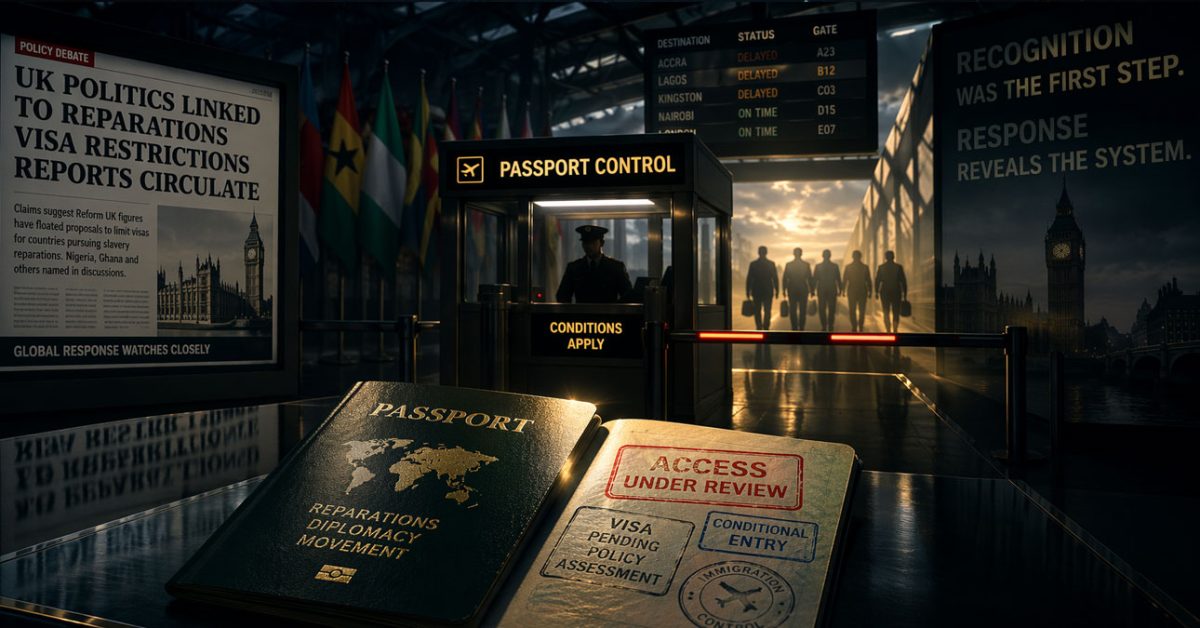
When Recognition Carries Consequence: Reparations, Power, and the Signals Systems Don’t Announce Directly
As reparations debates expand globally, new claims suggest immigration policy could be used as leverage. This piece examines the signals, implications, and structural response.
When Procedure Replaces Conscience: Administrative Violence and Moral Anesthesia in America
Two civilian deaths, processed as routine enforcement, reveal how administrative violence normalizes harm. When procedure replaces conscience and moral anesthesia sets in, silence becomes participation—and history begins to turn quietly.