About Us | InnerKwest™: Unveiling Truth, Empowering Change, Shaping the Future At InnerKwest™, we are more than observers—we are watchmen of history, investigators of truth, and architects of a more just future. Our mission is to uncover hidden narratives, challenge distortions, and empower communities with knowledge that fuels progress. Preserving the Past, Analyzing the Present, Building the Future African Americans are not simply part …
Discernment: Observations and Signals
A reference page examining discernment, governance signals, institutional change, and emerging patterns shaping civic life in the United States.
Faith, Power, and the Racial Divide Inside American Christianity
An examination of how race, power, and authority shape American Christianity—and why the Black church is often scrutinized while white evangelical institutions operate without accountability.
When the World Stops Giving America the Benefit of the Doubt
As the United States prepares to host the world, global audiences are quietly reassessing its posture. From sport to diplomacy, emotional trust—long assumed, rarely tested—is no longer guaranteed.
When Procedure Replaces Conscience: Administrative Violence and Moral Anesthesia in America
Two civilian deaths, processed as routine enforcement, reveal how administrative violence normalizes harm. When procedure replaces conscience and moral anesthesia sets in, silence becomes participation—and history begins to turn quietly.
Bad Law Outlives Bad Administrations
Crypto was built as an alternative to a system defined by selective accountability and institutional immunity. As debate over the CLARITY Act unfolds, delayed markups, industry fractures, and historical enforcement asymmetry reveal a deeper struggle—one where outdated law risks reshaping innovation for generations.
Faith Without an Object Is Not Faith
Faith was once a moral constraint—an anchor that limited behavior and demanded accountability. Today, faith is often invoked without naming its object, transforming belief into permission. This InnerKwest essay examines how faith lost its moral compass, why conviction eroded, and what happens when belief is severed from restraint.
Peace Without Participation: The Board of Peace and Global Exclusion
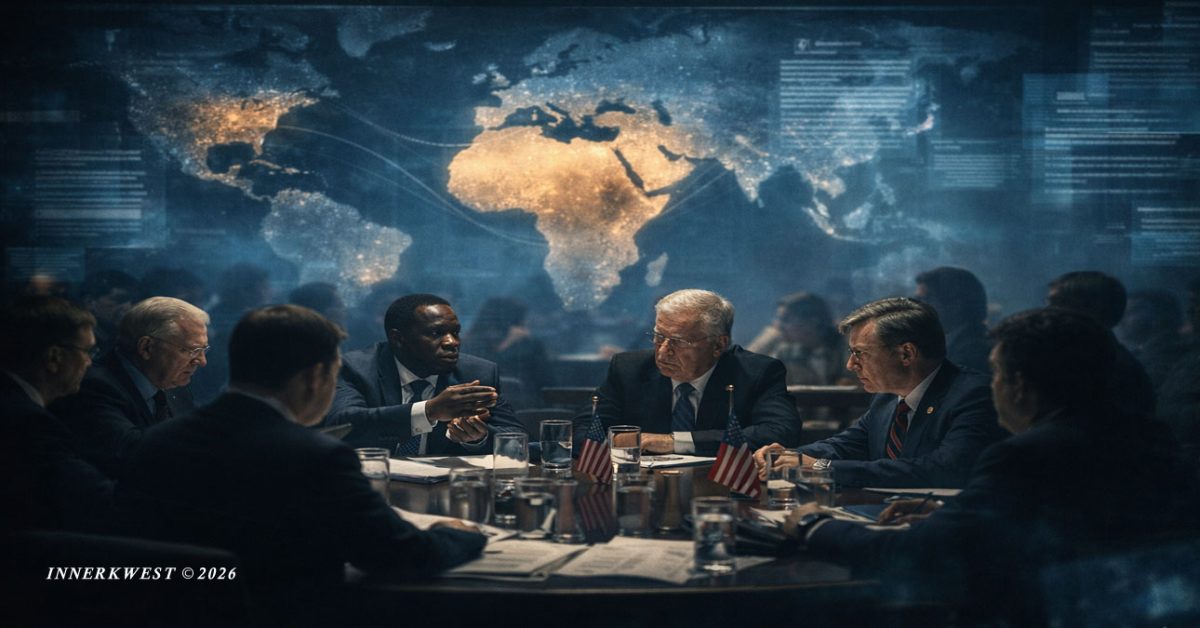
The proposed Board of Peace presents itself as a mechanism for post-conflict stability, yet its design links authority to capital and limits participation. As tensions rise among traditional allies over Greenland and alliance cohesion weakens, the initiative raises broader questions about legitimacy, trust, and the future of global governance.
When the Herd Learns to March
When conviction gains speed and conscience is surrendered to movement, faith becomes dangerous. This sermonette traces the biblical warning of the herd rushing into the water and its quiet echoes in moments when belief is overtaken by power, certainty, and borrowed conviction.
Participation Without Ownership Is Extraction
Participation has built the most powerful digital platforms in history. Ownership has not followed. This manifesto examines how culture, labor, and data are converted into capital—and who is excluded from appreciation.
The Price of Proximity: How Global Finance Makes Africa Pay More to Borrow
African nations routinely pay the highest borrowing costs in the global financial system, even when their economic fundamentals mirror those of countries elsewhere. This investigation examines how global risk models, banking regulations, and debt-service structures combine to price geography before performance—quietly constraining development, infrastructure, and long-term growth across the continent.