
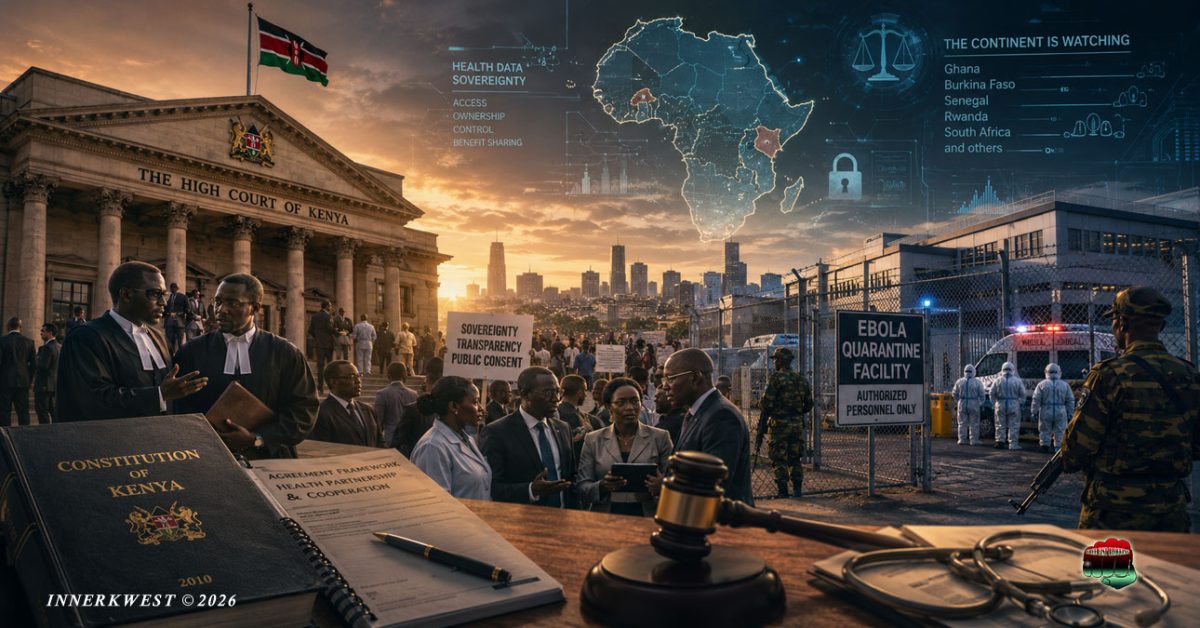
What began as a debate over a U.S.-backed Ebola facility has become a larger conversation about sovereignty, constitutional authority, public consent, and how African nations negotiate foreign partnerships in a changing geopolitical era.
Below you'll find a list of all posts that have been tagged as “Institutional Power”
What began as a debate over a U.S.-backed Ebola facility has become a larger conversation about sovereignty, constitutional authority, public consent, and how African nations negotiate foreign partnerships in a changing geopolitical era.

The controversy surrounding Navy promotions has evolved into something larger than military policy. At its core lies an unresolved American debate about race, meritocracy, historical memory, and institutional trust.
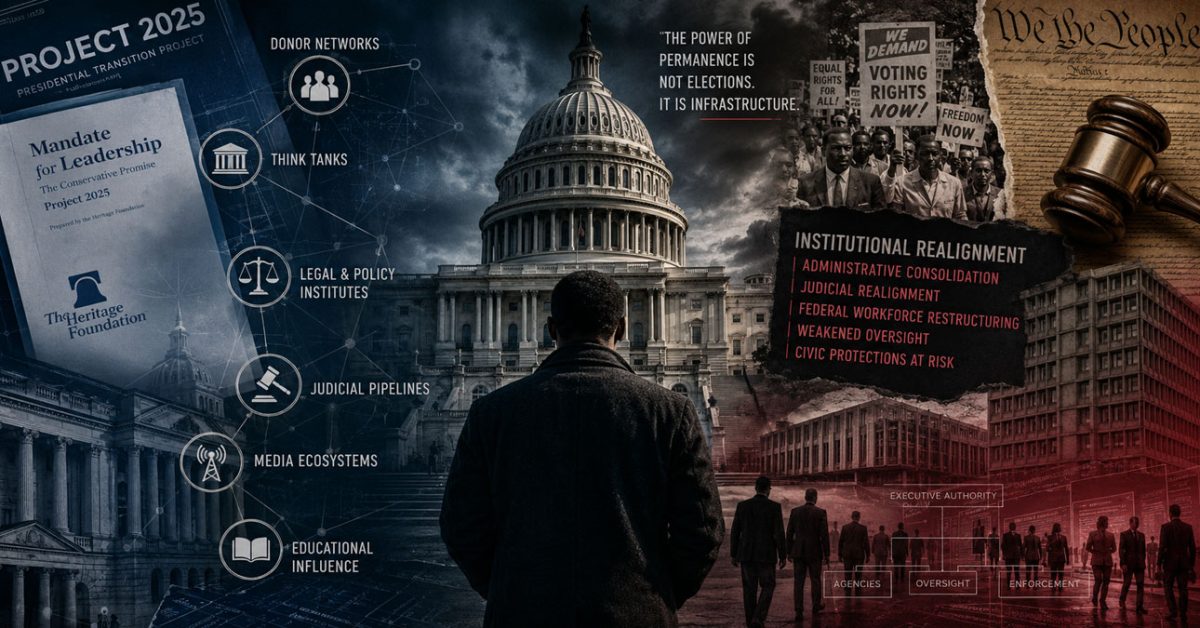
Project 2025 is being publicly framed as administrative reform and constitutional restoration. Critics increasingly argue it represents something much larger: the operational phase of a decades-long institutional strategy designed to recalibrate federal authority, civic enforcement, and post-Civil Rights governance in the United States. This InnerKwest Intelligence Desk analysis examines the Heritage Foundation, Kevin Roberts, donor infrastructure, and the growing debate over whether America is witnessing ordinary political transition — or long-cycle institutional restructuring already reshaping the nation’s civic trajectory.

As voting-rights disputes and redistricting battles intensify across the South, a deeper question is emerging beneath the surface of college athletics: could Black athlete influence eventually begin reshaping recruiting pipelines, HBCU economics, and institutional loyalty itself?

The recognition of slavery as a crime against humanity establishes a global record—but it does not guarantee structural change. This InnerKwest analysis examines how accountability systems absorb acknowledgment without necessarily producing outcomes.

The recognition of slavery as a crime against humanity raises a deeper question: who bears the economic consequences. This InnerKwest analysis examines how wealth accumulation, liability, and global resistance shape the debate over reparations.

When systems absorb crisis, disruption doesn’t end—it continues. This InnerKwest analysis examines how history repeats without resolution, linking colonial-era violence to modern conflict through patterns of continuity.

The U.N. resolution recognizing slavery as the gravest crime against humanity passed with broad support—but key nations resisted its implications. This InnerKwest analysis examines how legal arguments, abstentions, and opposition reveal the limits of acknowledgment within existing global systems.

Colonial extraction did not end with slavery—it evolved into modern systems of economic and institutional power. This InnerKwest analysis examines how the Congo and other historical frameworks reveal the continuity of global extraction structures.

From Platform Gatekeeping to System Design Across capital, platforms, and financial systems, persistent disparities in access and visibility continue to shape who is seen, funded, and scaled—and who is not. By InnerKwest Intelligence Desk | March 30, 2026 The Architecture of Visibility The original premise of social media was rooted in the idea of a level playing field—an environment where …